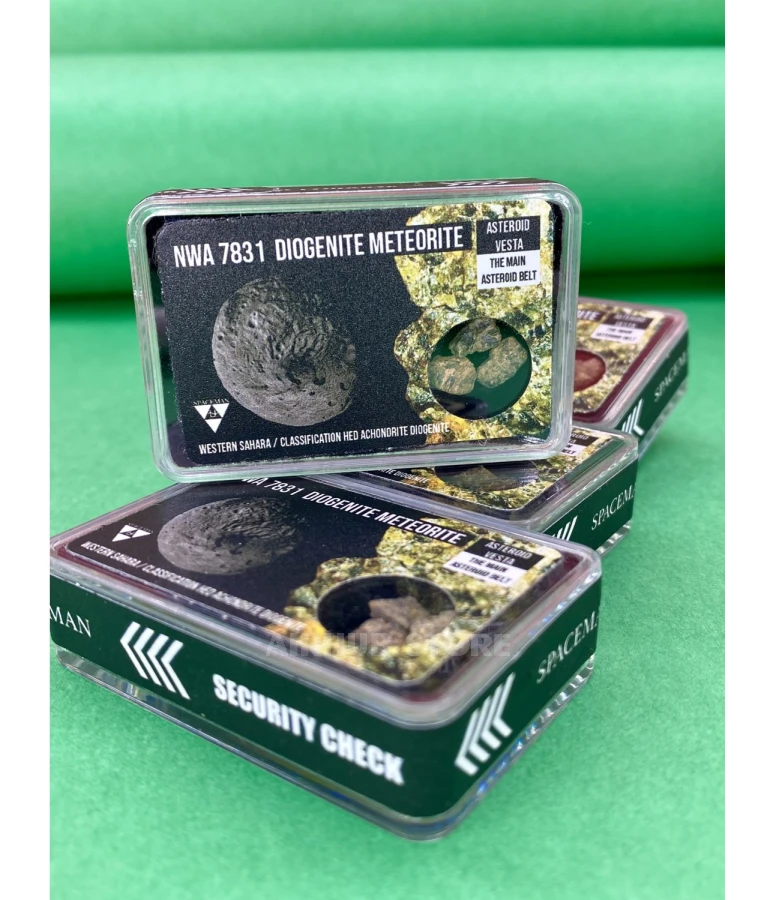
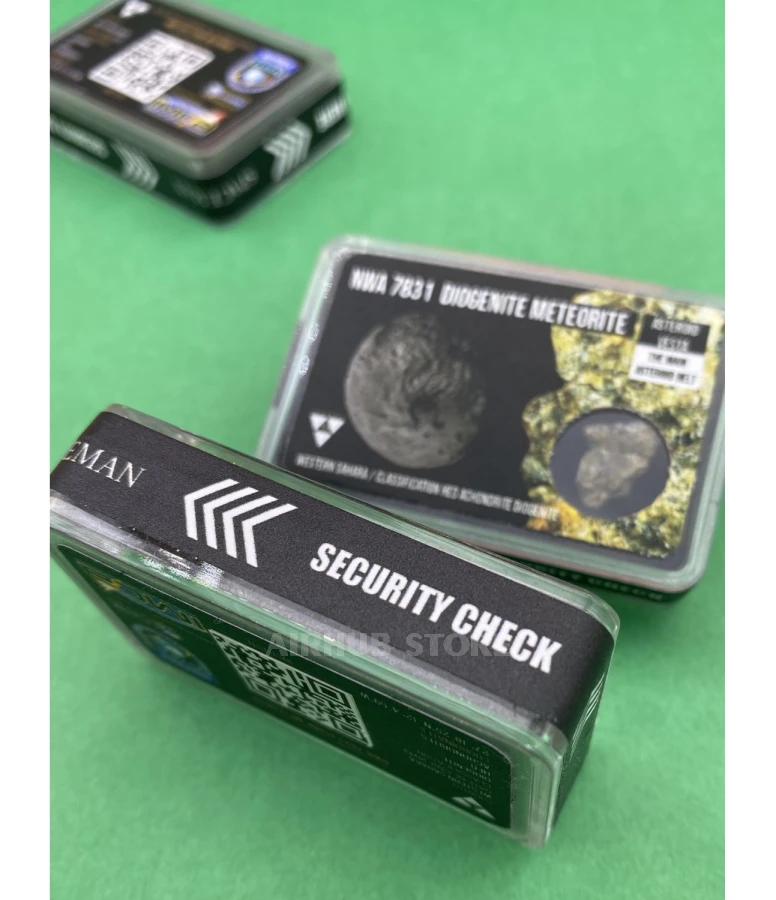
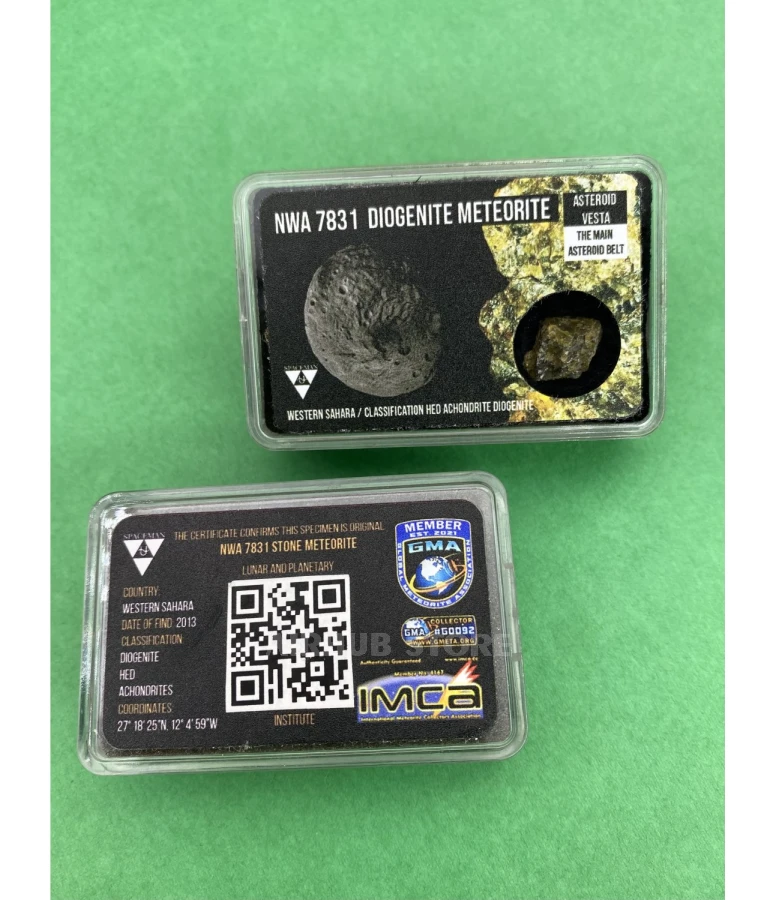
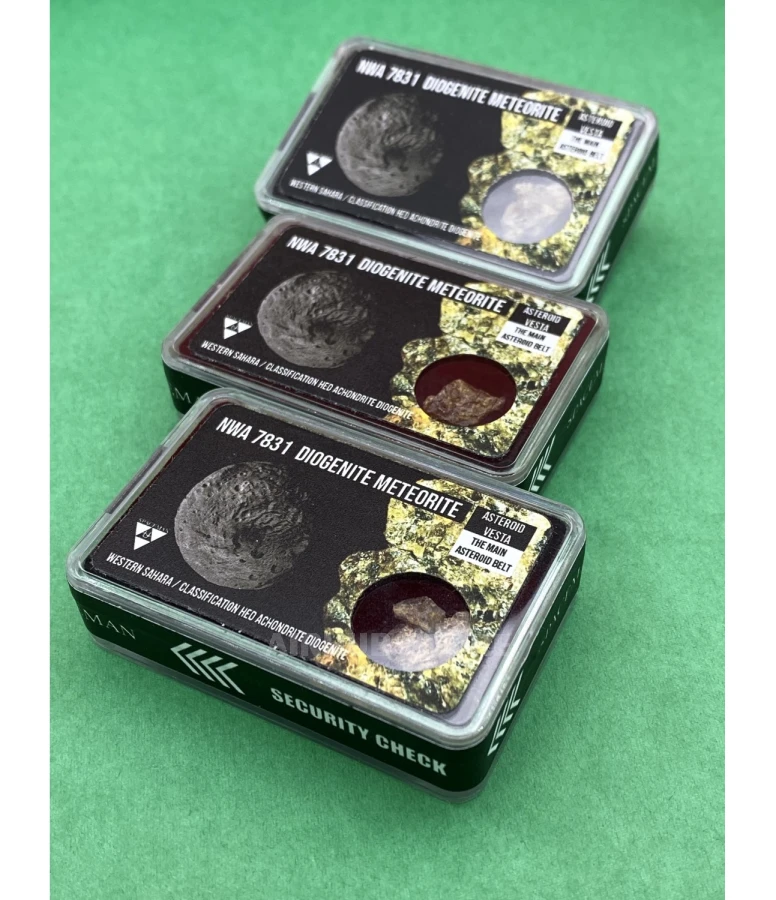
Meteorite Northwest Africa 7831
NWA 7831 is the abbreviation of the meteorite.
The meteorite is delivered in a closed case.
When purchasing such a meteorite, our manager will contact you and you can choose a sample for yourself.
The authenticity of the meteorite is confirmed by a certificate from the Ukrainian company SPACEMAN, which is a member of the organization https://imca.cc under registration number 4167. IMCA is the most respected organization in the world of meteorites. SPACEMAN is also a member of The meteoritical society and the Global Meteorite Association and is the only representative of these organizations in Ukraine.
Diogenites are a group of stony meteorites of the achondrite type. Together with howardites and eucrites, they are united in the HED-meteorite clan. HED meteorites are thought to have originated from the asteroid 4 Vesta, with diogenites forming at greater depths than howardites and eucrites and therefore being modified by higher temperatures. Vesta is the largest and brightest asteroid in the asteroid belt and the second largest body (after the dwarf planet Ceres), with an average diameter of about 525 km (326 mi). Several billion years ago, two powerful collisions ejected some of Vesta's mass, and some of this material fell here on Earth as HED meteorites (howardite, eucrite, and diogenite). Amazingly, when you look at photographs of Vesta or Eve through a powerful telescope, you can easily see the craters from which the HED meteorites came.
Mineral composition and geochemistry: Orthopyroxene (Fs28.1-28.3Wo3.0-3.3; FeO/MnO = 29-31), clinopyroxene (Fs10.9Wo43.1, FeO/MnO = 26). Oxygen isotopes (K. Ziegler, UNM): analyses of acid-washed orthopyroxene by laser fluorination gave, respectively, δ17O = 1.677, 1.793, 1.810; δ18O = 3.680, 3.879, 3.875; Δ17O = -0.266, -0.255, -0.236 per mil.
You can order such a meteorite for fans of space and NASA on our website or buy it in the store at 50b Khreshchatyk, Kyiv. We provide fast delivery to anywhere in the world and guarantee the quality of each product.
Other products that may also interest you.
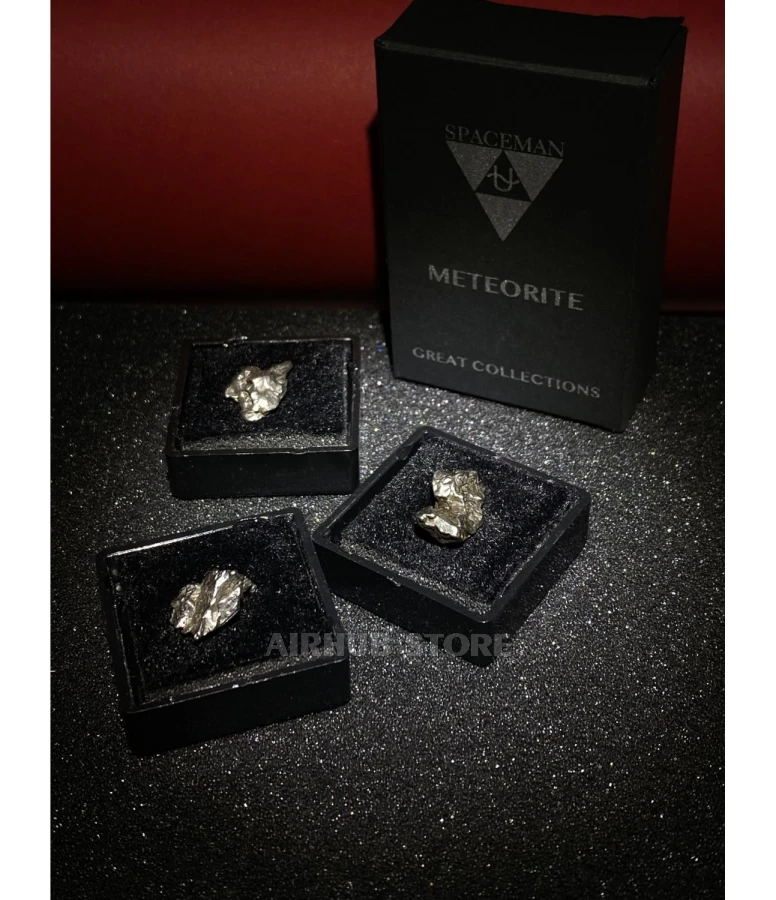
Campo del Cielo is a large iron meteorite weighing 50 tons. The meteorite fell about 4,600 years ago, 800 km northwest of Buenos Aires in the provinces of Chaco and Santiago del Estero in modern-day Argentina. Only about 5% of meteorites found on Earth contain iron, so the Campo del Cielo material is very valuable for collecting. Incredible specimens of this meteorite can be found in museums and private collections around the world.
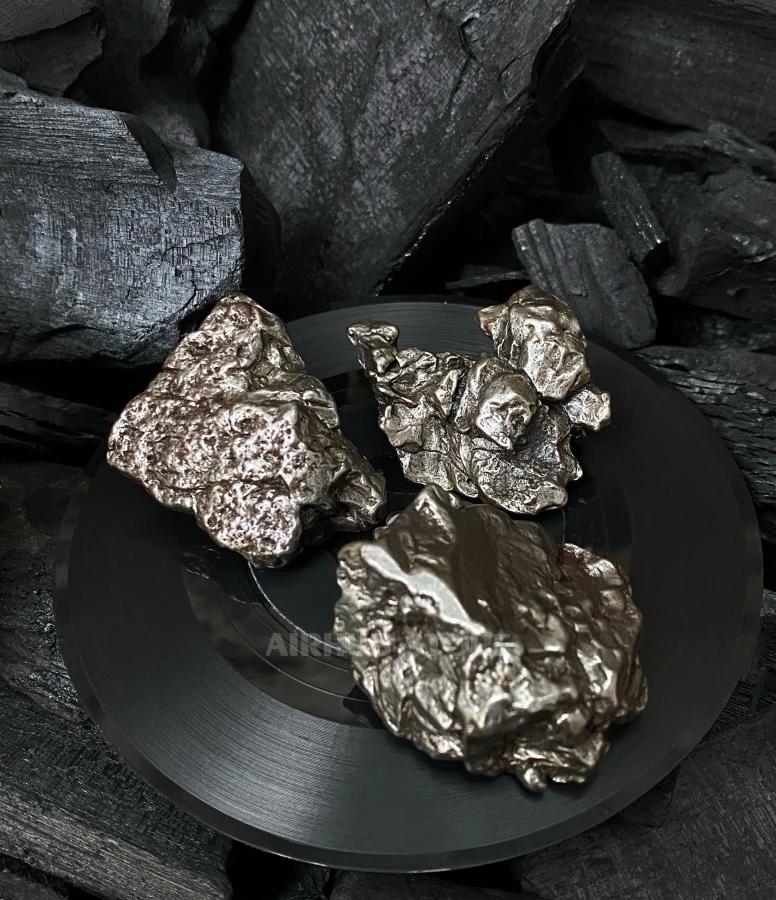
Campo del Cielo is a large iron meteorite weighing 50 tons. The meteorite fell about 4,600 years ago, 800 km northwest of Buenos Aires in the provinces of Chaco and Santiago del Estero in modern-day Argentina. Only about 5% of meteorites found on Earth contain iron, so the Campo del Cielo material is very valuable for collecting. Incredible specimens of this meteorite can be found in museums and private collections around the world.
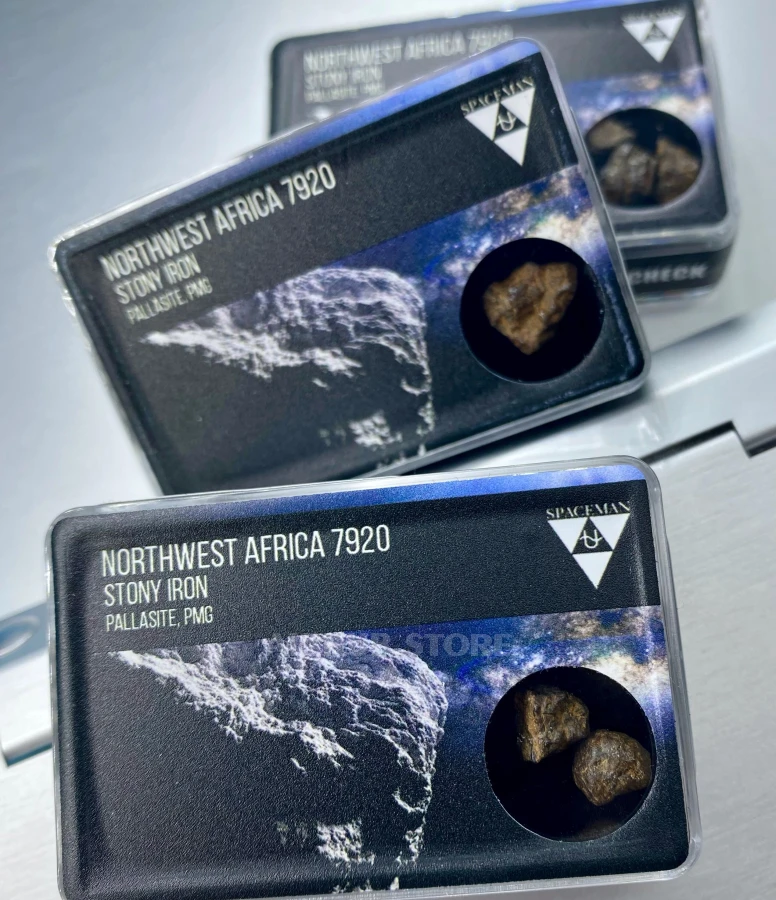
This meteorite traveled a long way through outer space, survived collisions and cataclysms before falling to Earth. It was found by a local hunter who passed his find to Brahim Tahir. Brahim, realizing the uniqueness of this specimen, sent it to his partner, Sean Tutorov, for classification in 2012.
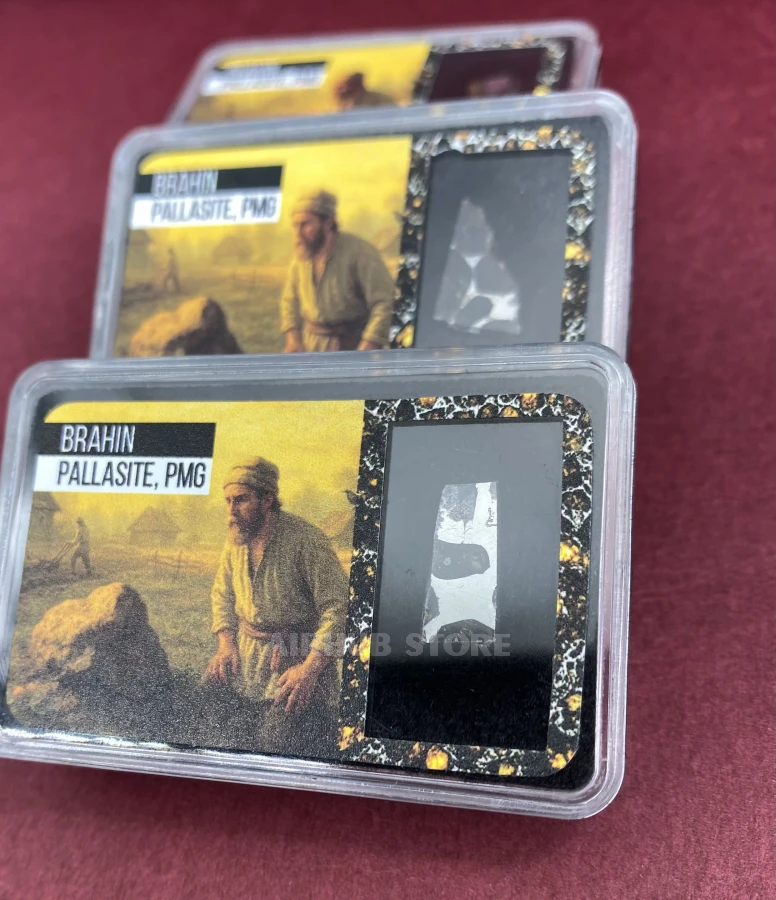
A rare palasite meteorite with an iron-stone structure, found in the Bragin district back in 1807. It is unique in that it contains olivine crystals embedded in an iron-nickel matrix. One of the few samples from the universe that you can hold in your hand.
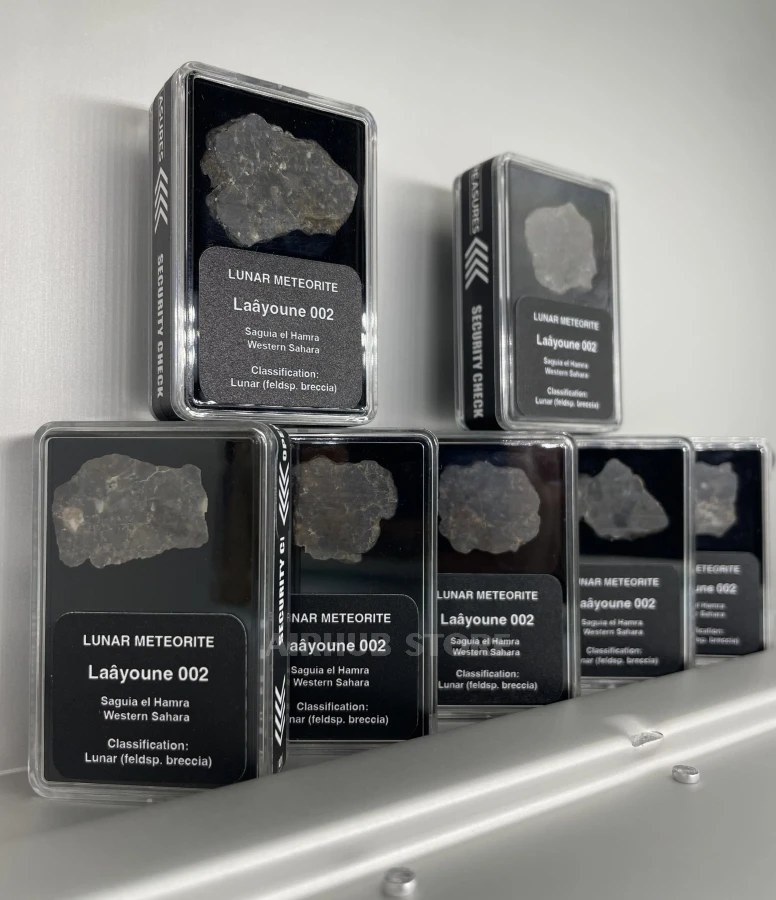
Found near the city of El Aayoune, Morocco, in January 2022 and purchased from Aziz Habib, who found this meteorite.